


Introduction
Artificial intelligence is quickly becoming embedded in modern ERP systems, financial reporting, analytics, and business process automation. For companies investing in AI in ERP, especially through NetSuite AI, ERP automation, and advanced analytics tools, the opportunity to improve efficiency, scalability, and decision-making has never been greater.
From AI use cases in finance to AI for accounting automation, organizations are launching ambitious ERP AI projects designed to streamline workflows, improve forecasting, and accelerate operations through smarter NetSuite automation and NetSuite optimization strategies.
But despite the excitement and investment, many AI initiatives fail to deliver meaningful business value. The reason is usually not the model, the software, or the technology itself.
Most AI failures are adoption failures wrapped in impressive demos.
Without strong AI governance, reliable ERP data quality, and a practical strategy for organizational AI adoption, even the most promising AI initiatives struggle to create lasting operational impact.
Understanding why AI projects fail is the first step toward building an AI strategy that improves real business operations.
Why AI Projects in ERP Fall Short
1. Lack of a Clear Business Case
One of the most common mistakes is starting with the technology instead of the business problem. AI initiatives often struggle when they:
- Operate outside day-to-day workflows
- Introduce more complexity instead of reducing it
- Lack defined KPIs or measurable ROI
- Fail to connect to finance, operations, or customer outcomes
Without a clear business objective, AI becomes an experiment rather than a solution. If users don’t see how it supports their work, adoption stalls and results quickly fade.
2. Poor or Misaligned Data
AI is only as reliable as the data behind it. In ERP environments, many AI initiatives struggle because of incomplete or inconsistent data, unclear ownership, conflicting reports across departments, and poor master data management.
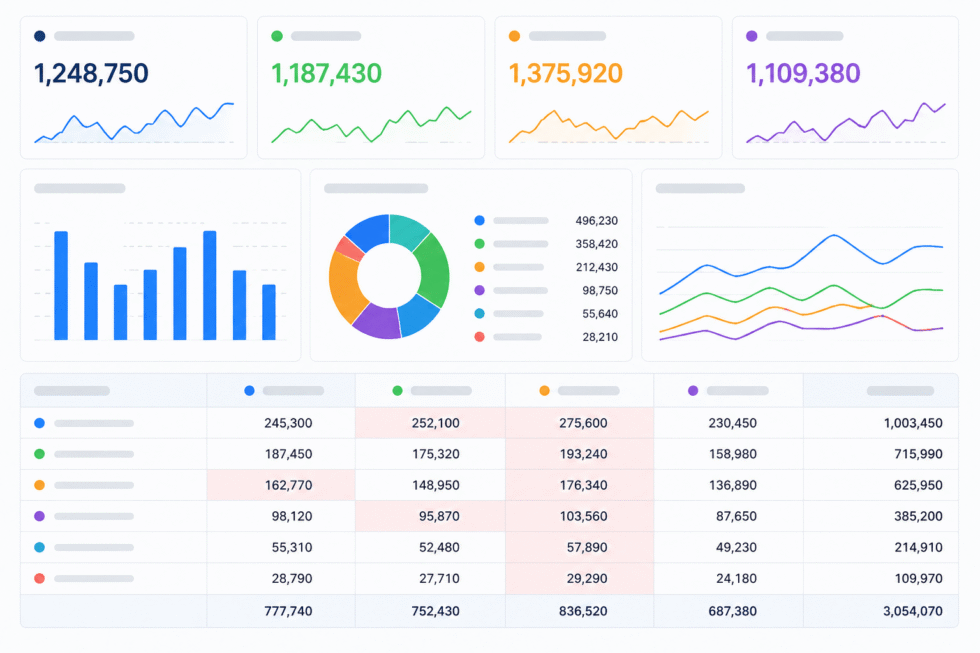
This becomes even more critical in NetSuite and other ERP systems, where financial reporting, customer records, vendor data, inventory, transactions, and workflows all depend on accurate, structured information. A strong understanding of how NetSuite financial reports function, including the relationships between transactions, reporting structures, and system data, is essential for building reliable AI and automation strategies 👇
When the underlying ERP data is not trusted, neither are the insights. That lack of confidence creates resistance, slows AI adoption, and limits long-term business value.
3. Lack of Ownership and Accountability
AI initiatives often fall into a gray area between business and IT. That is where many projects break down.
Common issues include:
- Limited engagement from business leaders
- No clear accountability for outcomes
- Budget concerns due to unclear scope or timelines
- No defined owner for data governance
- Treating AI as a side project instead of a strategic priority
AI projects need business ownership, not just technical sponsorship. Without defined accountability, projects lose direction, momentum, and long-term viability.
4. Trying to Scale Too Quickly
Ambition can quickly turn into overreach. Many organizations attempt to do too much too soon, resulting in:
- Premature over-automation
- Low user trust
- Too many pilots running at the same time
- Unclear priorities
- “Pilot purgatory,” where initiatives never reach production
Instead of building confidence, this approach creates confusion and skepticism.
A better approach is to start with one practical, high-impact use case and prove value before expanding.

The Reality: AI Success Isn’t About the Model
Avoiding these pitfalls requires a shift in focus. Successful ERP AI initiatives are not only about choosing the right AI tool. They require strong business alignment, clean data, governance, and user adoption.
The companies that succeed with AI usually follow a few core principles.
Start Small, Then Scale
Launching a pilot is easy. Scaling it is the real challenge.
Successful teams typically:
- Focus on one high-impact use case
- Define measurable success criteria
- Learn, refine, and build momentum
- Use early wins to drive broader adoption
For example, an organization may begin with AI-assisted invoice coding, financial variance explanations, or automated exception detection before expanding into broader process automation.
Each successful deployment makes the next one faster and more effective.
Establish Clear Ownership
AI success depends on structure and accountability.
Organizations should define:
- Business owners
- Data stewards
- IT and system owners
- Process owners
- Success metrics
- Governance and review cadence
Strong ownership keeps AI initiatives aligned with business goals and helps prevent projects from becoming disconnected experiments.

Focus on Meaningful Use Cases
Not all AI use cases are worth pursuing. The most successful ones:
- Solve real, everyday business challenges
- Improve existing ERP workflows
- Deliver measurable ROI
- Reduce manual effort
- Improve visibility or decision-making
- Provide value users would miss if removed
If an AI solution does not solve a real problem, adoption will always be difficult.
Good ERP AI use cases often include:
- Automating repetitive finance tasks
- Identifying transaction anomalies
- Supporting month-end close activities
- Improving forecast accuracy
- Explaining reporting variances
- Enhancing customer or vendor insights
- Streamlining workflow approvals
The best use cases are practical, measurable, and connected to how people already work.
Prioritize Adoption Over Perfection
Perfection slows progress. Adoption drives value.
Successful organizations:
- Do not wait for 100% accuracy to launch
- Use transparent logic and explainable outputs
- Keep humans involved in review and approval
- Gather feedback from real users
- Improve the solution over time
In ERP environments, trust is everything. Users need to understand how AI supports their work, where it fits into the process, and when human judgment is still required.
The more the solution is used, the more valuable and effective it becomes.
Moving AI Forward in ERP
At QueBIT, we know that successful AI initiatives go far beyond the technology. They require a clear strategy, reliable ERP data, defined ownership, and strong user adoption.
That is why we focus on aligning AI with your ERP environment, business processes, and measurable outcomes.
We help customers:
- Identify high-impact AI use cases tied to business results
- Align AI initiatives with existing NetSuite and ERP processes
- Improve data readiness and reporting confidence
- Establish governance, accountability, and a roadmap for scale
- Move from experimentation to practical automation
If you are ready to move beyond AI experimentation and build a results-driven ERP AI strategy, we can help you get there.
About Suite Answers That Work
Suite Answers That Work is a NetSuite Solutions Provider with 30+ years of combined experience. We specialize in NetSuite implementation, optimization, integration, rapid project recovery, rescue services, and custom development.
Every business is unique, but with 40+ NetSuite clients over the last six years, our consultants have likely seen your challenge or created a similar solution.
If you would like more information about NetSuite, ERP optimization, or AI-enabled business process improvement, contact us today.