


Introduction
E-commerce marketplaces continue to grow fast. With the global e-commerce platform market expected to leap from $8.09B in 2025 to more than $21B by 2033, companies are racing to keep up with rising customer expectations, new omnichannel commerce demands, and increasingly complex digital operations. As brands expand into marketplaces, mobile commerce, social selling, and subscription models, one thing becomes clear: your ecommerce systems need to talk to your ERP software in order to stay competitive.
That’s where e-commerce integration and unified commerce come in.
Whether your business already runs on NetSuite, you’re exploring cloud ERP, or you’re simply ready to eliminate manual processes with better ecommerce automation, a solid integration strategy can be the difference between a fragmented, error-prone tech stack and a smooth, scalable operation powered by real-time data syncing.
Let’s break down what e-commerce integration really means, and the challenges to look out for as you modernize your operations.
So… What Exactly Is Ecommerce Integration?
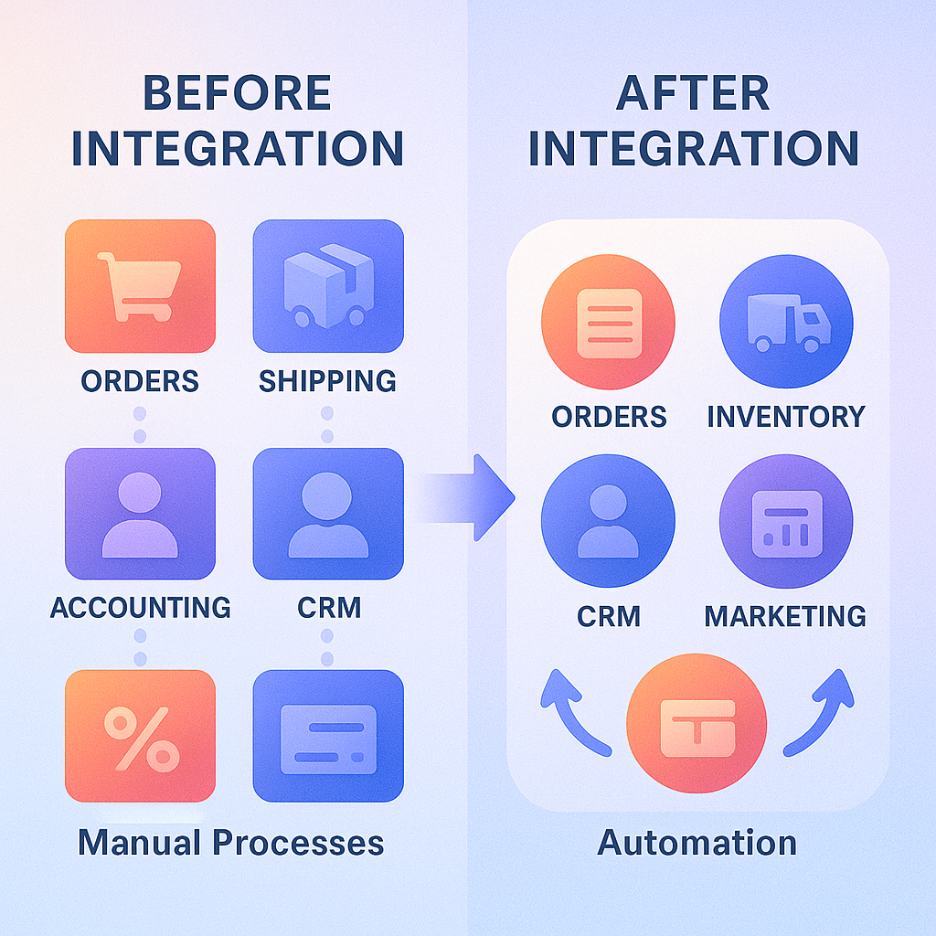
In simple terms, ecommerce integration connects your online store to the rest of your business tools, inventory, accounting, CRM, … you name it. When everything is linked, data moves automatically and consistently across your systems.
No more re-entering orders.
No more mismatched inventory.
No more “Sorry, we oversold that item.”
For NetSuite users, this connectivity is especially important. The whole power of NetSuite lies in centralizing your data. Integration ensures your e-commerce platform isn’t living in its own little world.
Why E-commerce Integration Is a Game Changer

Here’s what happens when your ecommerce platform and back-office systems work together:
1. Less manual work, more automation
Orders, inventory updates, shipping notifications, and financial entries- you can automate it all. Your team gets time back, and your processes become more consistent.
2. Fewer mistakes
Duplicate data entry and mismatched records become problems of the past.
3. Lower costs
Automation + accuracy = fewer returns, fewer support tickets, and fewer band-aid fixes.
4. Real scalability
Want to add a marketplace? Launch a new product line? Expand into another region? Integrated systems make growth smoother and more reliable.
5. Better customer experiences
Customers get accurate stock info, real-time order status, and personalized communication because all their data is in one place.
6. Smarter decisions, faster
With synchronized data flowing into NetSuite, your dashboards and reports become far more reliable. Leaders get clear insights without waiting for manual updates.
Where Ecommerce Integrations Make the Biggest Impact
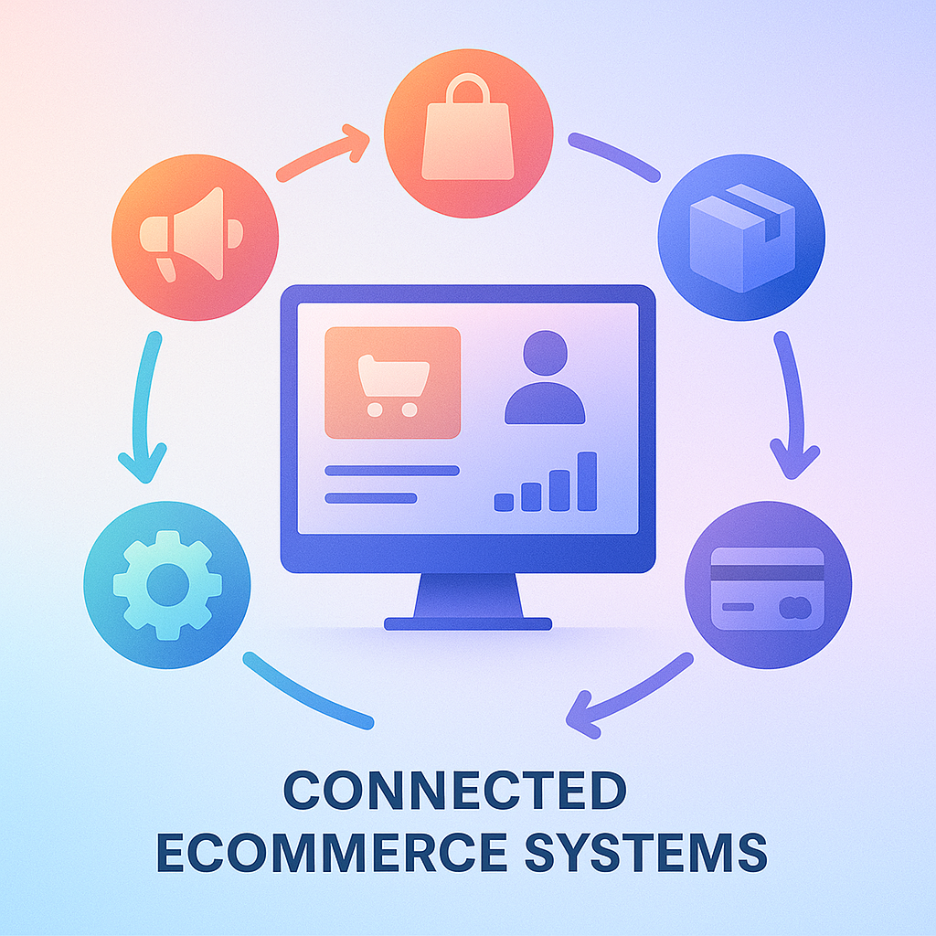
These are the most common and most valuable integrations businesses set up:
Marketing Tools
Connect your email, SMS, and social platforms to personalize campaigns, trigger cart-abandon emails, push post-purchase messages, and measure results.
Accounting & Finance
Automatically sync sales, refunds, taxes, and fees so your NetSuite financials stay accurate in real time.
Ready ERP (like NetSuite)
Ensure orders trigger inventory updates, fulfillment, and financial entries instantly, keeping your business running smoothly no matter how busy things get.
Ready CRM
Give your sales and support teams a complete view of every customer, including preferences, history, and channel interactions.
Inventory Management
Show accurate stock levels across every channel, every time. No overselling. No stockouts. No guessing.
Payments
Securely process transactions, automate reconciliation, and reduce checkout friction.
Logistics & Shipping
Auto-generate shipping labels, sync tracking updates, and keep customers informed every step of the way.
The Challenges to Watch Out For

Integration can bring massive value, but it’s not always simple. Common roadblocks include:
- Older systems that don’t connect easily
- Security requirements, especially when customer data moves between tools
- Budget constraints (integration isn’t a one-time cost)
- Multichannel complexity
- Misunderstanding what each system can actually do
- Vendors and APIs that don’t play well together
These aren’t deal-breakers, but theyarethings to plan for.
Tips for a Smooth Integration (Especially if You’re Using NetSuite)
1. Know what you want to achieve
Efficiency? Faster fulfillment? Better customer experiences? Your goals should guide your entire integration plan.
2. Clean up your data
Duplicate customer accounts, inconsistent SKUs, and outdated product names; clean them before they spread across systems.
3. Make security a priority
Use strong access controls, encryption, and vendor validation to keep your data safe and compliant.
4. Test everything
Run test orders, returns, tax calculations, and multi-channel workflows before you go live. You’ll catch problems early.
5. Take advantage of real-time dashboards
Set up alerts for low stock, failed transactions, or slow syncs so you can fix issues quickly.
6. Keep optimizing
Your business will evolve. Your integrations should evolve with it. Regular audits go a long way.
Why NetSuite Helps You Get E-commerce Integration Right
Conclusion
If your business is already built on NetSuite, or you’re thinking about moving to it, you’re in a great position. NetSuite SuiteCommerce brings ecommerce, inventory, orders, financials, and customer data together on one unified cloud platform. Instead of juggling multiple disconnected systems, NetSuite lets you run everything on one foundation and add the ecommerce tools that make sense for your business.
About Us
We are a NetSuite Solutions Provider with 30+ years of combined experience. We specialize in implementation, optimization, integration, rapid project recovery and rescue as well as custom development to meet any business need. Although every business is unique, with 40+ NetSuite clients over the last 5+ years our NetSuite Consultants have most likely seen your challenge or created a similar solution. If you would like more information on NetSuite or just have questions on your project, feel free to contact usHere.